
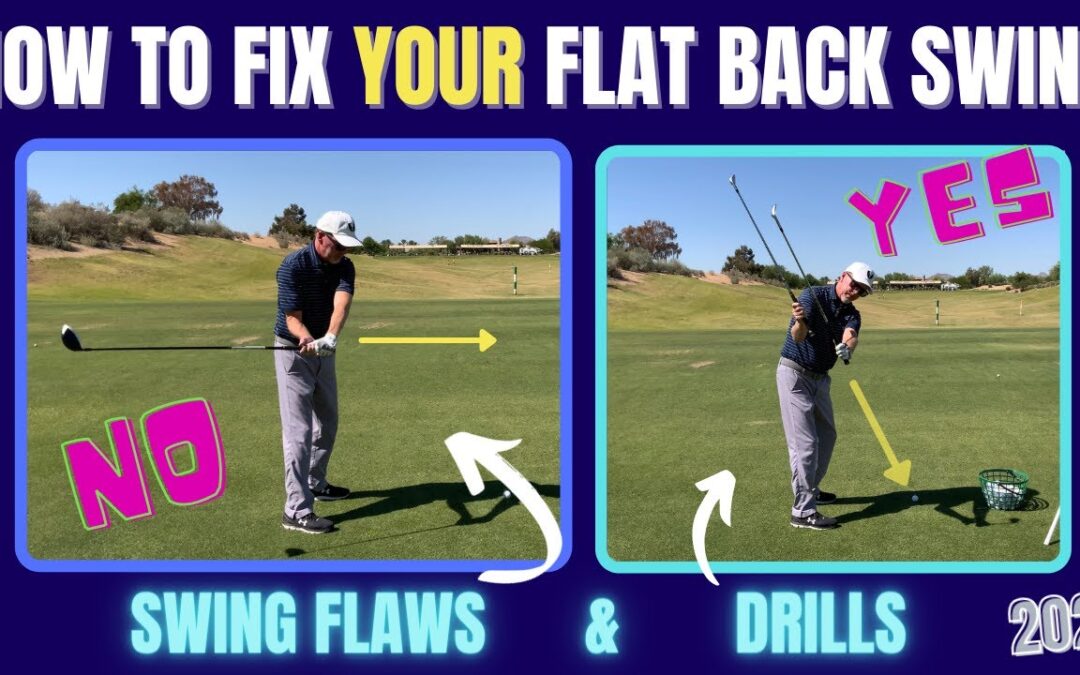
– Okay, welcome back. Here, we are at the beautiful
Westin Kierland Golf Club in Scottsdale, Arizona. And in this video, let's talk about how to fix that back swing that's getting inside and flat, causing all those problems on your downswing. If you are new here, don't forget to hit that subscribe button,
hit the like button if you like the video as well, and if you want to be
notified every time I put out a new video, hit the bell as well. Okay, let's get into fixing this backswing that's getting too
flattened to the inside. And for a lot of golfers,
it's really a major problem. Other sports have
contributed, might be hockey, getting the hockey stick in around here, could be tennis where the racket wants to go around you, instead of going up and down. Some things can contribute to it, and some people just have the natural inclination to sit up to
a ball, raise the hands and twist that thing to the inside and get it going flat.
So let's talk about the main causes of it and then what we can do to fix it. So, first off, the way you grip the club can drastically affect
how that club goes back. And for a lot of players,
when they grip it with a very weak position
with the hands turned to the left or a right hand,
or that makes the arms rolling with that club to the inside. So the club starts here
and with that weak grip it just wants to roll and get flat right off the get-go. For other players, it
might be something else, but one way or another, a flat back swing is going too far around your body and
too low, versus up here high enough to get a strike
on that ball coming down. It's also very possible to have your setup in such a way that your
shoulders are incredibly open pointed off here to the left. And then it makes you sort of move in such a way that hoists the club back to the inside and pulls it flat as well.
When we watched the different players on TV, pros on the LPGA tour, PGA tour wherever it might be, we see different swing shapes
out there. We see swings like Justin Thomas's where that club's going extremely vertical
straight up in the air, Fred Couples, Bubba Watson. We see other swings like a Matt Kuchar and other players that are extremely low and around and everywhere in between. And there's some things you have to really consider when you look at these different swings and one is how the body is moving, and the other is how the arms and the club are moving. For most players that
swing the club too flat on the way back, no
matter where they set up, once that club starts to
move around the corner the shoulders are simply turning too flat to keep the club working up into the right position.
So if their body is turning in such a way that they're
just moving incredibly flat, this left shoulder is very high, and I'm turning this way that will tend to send the club more around the corner and get back behind me
and lower back here. They tend to raise the handle up and then the front arm gets in front and moves the
club this direction. It's very hard to get the
club working super flat on the takeaway, if your hands are staying lower and closer to your legs. So that's one of, sort of the keys that you'll be working on with getting this out of your game is that initial takeaway, keeping the hands in
closer so the clubs head stays in front. And if you imagine
someone like a Ryan Moore or even a Jim Furyk where everything's in here very low and then suddenly the club works extremely
steep on the way up and goes this way.
Well, it's very hard to do that, of course, if your
hands are moving outward and rolling around. So that
roll sends the club head in low, hands are high,
front shoulder is high, and now I create this flat movement. Anyone who's had this flat movement here, if you're hitting a driver, you can come from there and sometimes
hit a ball off of a tee, okay? Even your wedge
can actually be effective sometimes if your swing is flat, like a Lee Trevino, some of those players that used to swing the club flatter because, you're in close
enough to the ball here, that if you happen to get the thing flat and around the corner, you're still close enough
to get an angle on the ball and hit just enough down
to get it up into the air.
When it comes to hitting these guys though middle irons, hybrids, fairway woods we know we've got to
have a down strike on it but on the correct angle. So a club coming down on
the right swing plane, like so, is critical to
get you the right angle on the ball to compress it and get it up the club face and up into the air without getting too steep or over the top. Anything that's coming from the inside too flat is going to hit that topper where it rolls right over the top of the ball and just rolls it.
So, that's why the flat
swing is so devastating to some clubs in your bag,
in the middle of your bag like the middle clubs,
fairway woods hybrids, and it just doesn't affect the driver near as much or a ball teed up or like we said, even a wide shot. Okay, now that we've identified some of the things that are
causing this flat back swing, what can you do to work
on getting the club working up the plane a lot better? Well, in the backswing
and right off the get go we have to make sure that
you can get this club working back properly on the plane. So we want to make sure
this club is working back in such a way that your
shoulders, arms, and club are all working together to move this button closer to your legs and the club head out in
front like you see here.
Anything that turns your arms, turns those forearms early, and sends the club head in and low, is going to start
it on its flat plane. So you have to go the opposite, keeping the hands in close
and the club head out. Now I find one great way to work on that for a drill is
to do one handed swings. So if you do a one-handed
move with your left hand it's very hard to go this way without feeling it
completely out of position.
So working on the takeaway,
just moving it, shoulders, arms and club together in that position then put your right hand on
and then start hinging it up, and that creates a steeper swing plane, halfway back. Another great drill to do for working on this takeaway and
getting this flat back swing out of there, is to use two clubs and swing them back at the same time, one in each hand. So go ahead and set up
there, put one on each hand, and as you move them back, because it's now heavier,
you can once again start to feel this movement very easily if it gets around the corner.

If you start hinging those up together, you'll very quickly feel
what each hand has to do and how your body has to
move to keep the club working up into this plane, because whether you're a real upright player or even a more rounded player, the club still has to be more upright than you were swinging it halfway back. From here if you're more
of a rounded style player just swing it more around your body. You're simply turning
your shoulders steeper, at this point, after you
get the club up here, you're just turning a little steeper, So your shoulders are steeper but your arms are a little bit lower relative to your shoulders. Now, if you're a more upright player standing more tall, once again, the club still has to
get up here in the air, but then as you're turning your shoulder, the plane is not quite as steep and the arms are going up higher, like Justin Thomas's does.
No, we all have different swing shapes, some go higher, some
go more around, but one of the main factors that sort of ties in to how high you can swing a golf club is your left shoulder and the health of your left shoulder. If your left shoulder is able to lift and reach and raise the club
up in the air, well then as you're swinging and as your arm is going up in the air you can get the club higher up. If however you have problems with the front shoulder,
or it's just tighter, as you go back, the
height of your arm might be here, that might be it for you.
You might not be able to lift that any higher than it is here. But, that won't affect the overall plane of your swing and the
effectiveness of your swing, if you're working on
these drills to make sure the hands are in close,
the club head is out and then it hinges up to
here. Whether that's the top of your swing or, you're
more up here in this area, you're still able to now
get the club to shallow out get back down into plane
and compress that iron.
Now this flat back swing
can really affect how the club comes into the ball, of course. If we set up a little
device here to show sort of the overall plane or
general plane of the takeaway, when you work in the club back for drills if you put something in the
ground here, just to work on the takeaway, take it back
a foot or two, don't hit balls with it there, but simply
work that takeaway. And you'll start to get a sense of if you're rolling it into that, if you're twisting the club and rolling this front arm, especially, you can see very quickly
what that habit is and how it's affecting
also the shoulder plane of the pivot which then moves you off the ball a lot,
pulls you way back here and gets you flat.
Most players from here
are going to have a very hard time just coming from the inside and hitting a good shot, other than with the driver like we talked about earlier. But in here, this is the feel or look you can learn and
then start to hinge it to get the button
pointing more down instead of more out like it normally
is when you're swinging that ultra flat back swing. Now it's so vital that you
fix this flat back swing because as we know, you hit it with your down swing and from
a super flat position here it's very difficult to
make a good downswing. Some players have been
able to get away with it by taking it in flat, hoisting
it up and then pausing for a while and then
still getting it on plane. That's very challenging to do. If you're a player who does get it around and you can't fix it, if you
wait long enough up there and you give your body
long enough to get started, you can still get it on plane.
But once again, much more
difficult to do physics are really working against you. Things that go around the
corner this way tend to want to work their way back over the top. And so the reason you want
to fix it really is to make your downswing function easier. So when you're taking
this club back properly and it works its way here
in balance, hinges up, and it's much easier to shallow it out, because your legs start
working properly coming down and you get into this position here, much easier to get the club into the ball, when a club is working its way up and then down.
And this concept of balances
is something really important. You want to realize that when your club is on its end, it's easier
to swing it in balance. So when the club works its way up, it's just easier to move. And from here just like a baseball player, where they step and club wants to shallow that way, the same thing happens in golf. As your club goes up into a little more upright position, much easier then as you sit and rotate into
your legs, the club then wants to shallow out
and get on a much better path coming down. Okay. So I hope you can see
now what causes that club to get inside and flat and how to fix it. If you have any questions or
comments, leave it down below. I'll be happy to answer your questions.
Thanks again for watching. And we'll see you in the next video..