
– If you are swaying your
hips in the backswing or maybe you're sliding in the downswing, not getting any hip rotation, that means that you're not using your legs and your hips correctly and there's a really easy drill that's gonna make this
very simple for you. So one thing we have to
understand is we need to use the ground correctly if we're gonna use our legs
and our hips correctly. Specifically ground reaction forces. I know that sounds like
a fancy scientific term, but really it's quite simple. All it really means is that
you're pushing into the ground and the ground is pushing back up at you in equal and opposite directions. So this drill is gonna
make it really simple to understand that.
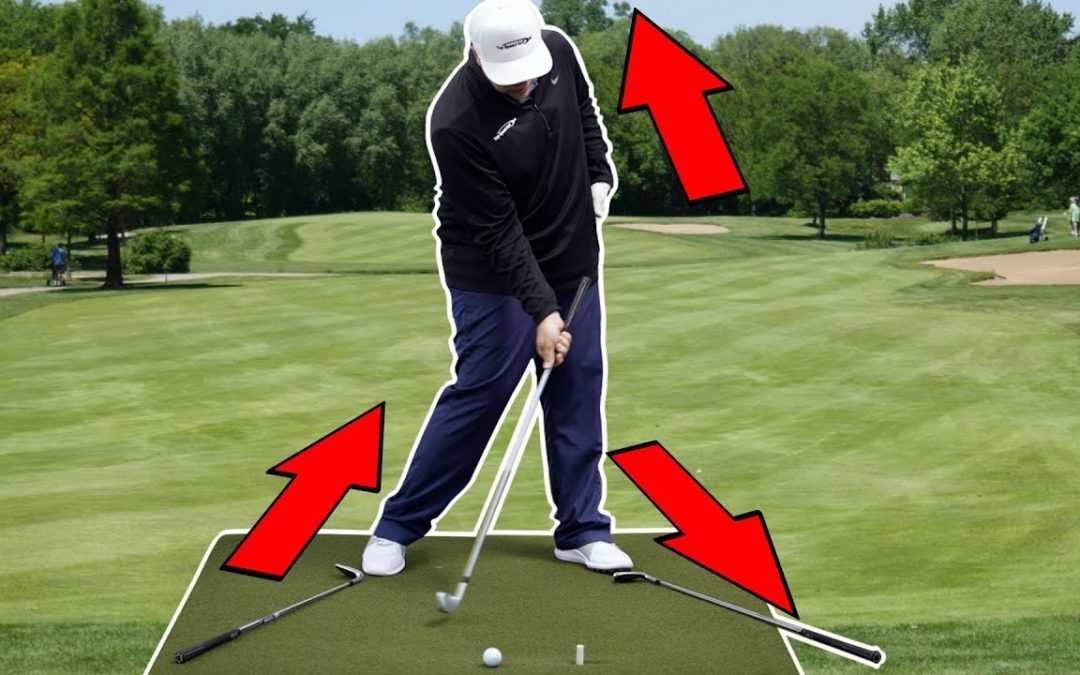
So grab a couple of clubs. It doesn't matter what clubs. And what I want you to do is I want you to get in your stance here. And place the ball
directly in front of you. And that ball, if you're
standing on top of a clock, that ball will be sitting at
12:00 o'clock on the clock. And you're gonna place one club
in front of your trail foot, pointed toward 1:30 on the clock.
And you're gonna take another club and place it in front of your lead foot, pointed toward 10:30 on the clock. And what I want you to imagine here– And again, remember, ground
reaction forces are equal and opposite forces that the ground is exerting on you, right. Imagine I was trying to jump, right. I was squatting down, I'd be trying to put as
much force into the ground as I possibly could. And then I would be
pushing everything away and straightening my body out. Trying to get everything
away from the ground as much as I possibly could to be able to jump as high
as I possibly could, right. So that's an equal and opposite force that the ground's putting on me
straight back up in the air. And I'm gonna spare you
from watching me jump. I probably have as much
hops as Phil Mickelson. But that's the example
of ground reaction force. So in the golf swing we
don't wanna do exactly that. We don't wanna push straight up.
'Cause if I do that, right, then my hip's just gonna go up, right. And what I want my hip to do, I want my hip to go up and back. 'Cause that's gonna
allow the hip to rotate. So these clubs on the
ground are going to be some imagery that's gonna
allow us to imagine, okay, I'm pushing away from
the direction of that club in the backswing. Not pushing away from the
direction of that club in the downswing, right. So get in your stance here and just simply what I want you to do is with your trail foot here I
want you to push into the ground and then take a step back, directly away from that club.
So if that club is going
in a straight line, I'd be standing in the line
that the club is going through. So push into the ground
and push straight back. So that's the same kind of sensation that you're gonna have in the backswing to rotate the hip back in a way. Now in the downswing same kind of thing. I want you to push into the ground and then take a step back
directly away from that club.
So if this was extended out, my foot would be directly on that line. So do that a few times to kind of get the sensation of, okay, these are the kinds of forces that I want to be putting into the ground to be able to rotate my body like we see the tour players doing. 'Cause they're staying nice and centered. You know, if I'm sliding my hips that way then that means that the ground's
actually exerting a force in this direction that's making me go this way. And then if I'm sliding
my hips that way, right, then I'm exerting a force into
the ground in that direction. And the ground's exerting a force that's going in this direction. And we want it to be equal
and opposite that way. That's what's gonna
allow us to turn our body and stay very centered like we see all the best players doing. So do that a few times, the step backs to get a feeling for that. So now, once you have a
good feeling for that, now let's get the club in the hands and what I want you to
do is I want you to have that same sensation, but now we're going to
keep our feet on the ground and push in the ground
and draw the hip back.
So what's gonna be happening there and what you may feel on your feet is almost like a shear force. So it's almost like if I'm standing here, my foot is pushing that way. So it's kind of sliding that way. Now it's not gonna slide because you're going to be
pushing into the ground. But that's a sensation
that you wanna have. And that's gonna help you
to draw that hip back. And when you do that your
lower leg and your ankle, that's gonna straighten out. Your knee is gonna straighten out. It's gonna lose flex and then your hip is gonna draw back. All right. So we wanna get that
feeling in the backswing. And then the downswing, before I start my arms coming down, I wanna apply that pressure here.
Some might call this the Snead squat. And that's exactly what they're doing. The Snead, the Tiger squat. I've heard it called several things. But that's exactly what they're doing. They're applying more force in the ground. If you can kind of squat down, that helps you to apply force. You're gonna jump a lot higher
if you really squat down and jump back up than if you just squat a little bit and jump up, right. So that's exactly what's happening in the Tiger and Snead squat. But the thing that a lot of
people get wrong with that is they just do the squat part. So they're just pushing
straight down the ground and they kinda just jump straight up. Well, that doesn't help you rotate. That helps you jump the body up and early extend and flip the club through impact and add a lot of loft. And you might get a lot
more speed from doing that but that's not gonna help you
to get that good compression by getting shaft leaning.
By virtue of getting
the body to rotate open. To do the Snead squat,
the Tiger squat correctly, I have to flex down into the ground and then push with my lead leg, I need to push down in a way toward that 10:30 position on the clock to be able to get the body
to rotate open, right. So again, the same
thing with the lead leg. I wanna feel like I'm going like that. A lot of times you'll see
very, very powerful players, so players like Justin Thomas for example. Justin Thomas, you'll often see, when he really tries to
get into one, like a drive, you'll see his foot
will kinda go like that. 'Cause he's pushing so
hard into the ground and down and out away from him that his body rotates and
his twerks open so quickly and with so much force, he actually becomes airborne
and he moves this way. If he was going straight up then his foot wouldn't go backwards. It would just go up like that. But what he's actually doing is his foot actually goes that way.

If you watch him very closely. And if you look at a
lot of long drive guys, same kind of thing. I'm not saying you need to
be trying to go out there and really push in the ground. Start with going about it in this way. But when you get the feel for it you can kind of work toward
creating a lot of power like they do. That's more of an advance level. But you can work toward
creating power like that and a lot of power like
those guys are doing. So push into the ground,
squat down to the ground, draw the hip back and then squat down into the ground, push down on the ground, draw the hip back by pushing down and out, away from you toward that 10:30 to rotate the body open.
So do that a couple of times. We go from the top. Pause. Push into the ground. Turn the hip away and go through. Do a few of those. Push back, pressure, push through. So remember, we wanna get
that pressure into the ground with the lead foot before
the arm start down. That's really, really important. 'Cause otherwise the downswing's
gonna start with the arms. And you're not gonna be
able to get that rotation from the body opening if you're starting the
downswing with all arms. So make sure you're getting
that pressure into the ground with the lead foot first. So now that you got the
feeling with the pauses, now I want you to add some flow to it. So put the club in front. Apply the pressure into the trail foot. Push away from that club on the ground. Draw the hip back and then do the same
thing on the lead leg. Push down on the ground. So this is gonna look something like this.
Push back away. Push back away. Push back away. Push back away. Push back away. Push back away. And you can see, I'm not sliding my hips
away from the target and way too much toward the target. My hips aren't getting
outside of my ankles, right. Now there is some lateral
movement in the swing. We're not staying dead
center the entire time. If you look at tour player swings you're gonna see there is
some lateral movement forward, typically, but we push into the ground,
draw the hip this way.
The hips move forward a little bit. And then we push into the ground and push the hips that way. That's what we wanna do to be able to use the ground correctly. And use the legs and the hips correctly. So this is really the first step to what we call the power turn
in the Top Speed Golf system. So it starts with the ground and the feet and then we use the legs properly and then we get the hips turning properly. And then eventually we wanna get the shoulders turning properly. And I see a lot of people
doing things to get speed. But I see a lot of people missing out on that low hanging fruit. They're doing kind of more of the advanced stuff to get speed.
Stuff that they see tour players doing. See, tour players are already
doing this in their swing. They're already getting a
pretty good shoulder turn. Most of them are. Some of them like John Rahm for example, not getting a huge turn, but hey, if you can swing
a 115 miles per hour with a shorter swing like he does, then more power to you. But if you're swinging 90 miles
per hour, 80 miles per hour, and you're not getting
as much turn as you can, you're really leaving a lot
of yards out on the table. And you'd be much better served working on getting a good hip turn and a shoulder turn to be able to create more space and time to exhilarate the club and get way more distance.
'Cause I'm telling you, it's so much easier to play golf when you hit the ball farther. A lot easier. So the next step to this is to get the shoulder turn
along with the hip turn and this is what we call the
power turn at Top Speed Golf. So I have a great bonus video where Clay Ballard, the
founder of Top Speed Golf, he's the one who created
the Top Speed Golf system. He's gonna show you a really great drill for how to get the shoulders
to work properly as well in the power turn. So if you wanna see that whole video, all you have to do is click
the iCart that's gonna appear in the corner of the screen.
Or if you don't see the iCart, no worries, you can click the link
in the description below. I'm gonna play a preview
of that video here in just a second. If you wanna see the whole video, click the iCart or the
link in the description. Play well and I'll talk to you soon. – Most of the instruction out
there today is killing you of your power. The things that they're telling you to do can make you hit it shorter and worst than that, not
even any more consistent.
I'm gonna go over some of the real secrets to powerful consistent golf in this video. Let's go get started. So here's some of the keys
into making that happen. If you wanna incorporate
this in your swing, let me break it down
exactly what you should do. Number one, let's focus
on the belt buckle. This is another big misconception. I wanna keep that belt
buckle facing the ball so I can really stretch out my midsection and really get loaded up. I'm not a big fan of that. That's really gonna kill your distance. In your backswing, I wanna feel like that belt buckle rotates to the right. And you really let your
hips and legs be loose. Notice how my legs are moving here.
I'm not trying to keep
those rigid and tight or I'm really just taking all
the speed out of my swing. So that one I really felt like I let my belt buckle rotate back. And a good key to this is feel
like your knees are loose. Feel like when you make your backswing. Piece number two, let's go ahead and rotate our shoulders. When I let my lower body rotate, my upper body can rotate
a lot better also. So if I let my hips move, my shoulders will move more. So here, once I got my hips working well, I'm gonna add to that my
shoulders making a big rotation. On average, on the PGA
Tour, players are getting about a 120 degrees of shoulder rotation. I don't see hardly anybody
getting less than 90 degrees. So start with the hips,
knees nice and loose. Allow the belt buckle to rotate. And then from there– So those are two really big keys. But here's the truth. There's one thing and if
you don't do this correctly, nothing else is gonna work..