
Welcome to Belvoir Park Golf Club uh I'm Aaron Small,
the Course Manager. Today we're going to take you through our spring aeration program and what we're doing today is we're scarifying the greens, really we're just looking to take any
debris out of them we're looking to keep our organic matter readings where we want
them and just really clean them out a wee bit. Because we're doing verti draining and solid tining
as well it's a good opportunity to do it first and then really you know the golfers don't need it
done also with lock down at the minute we have the opportunity to do it so the recovery we don't really care too much how long the recovery takes because there's no golfers here.
So we're going in with a light scarifying today probably just a mil or two below the surface and just clean them out and any debris we'll get rid of that So I've lifted a wee handful of the
organic matter we've taken out bit of fibre all the material that we don't want in
the ground so the reason why we're scarfying as well is open up the ground a wee bit that lets the sand in and then that'll give us the trueness on the green, the scarifying as well will make the grass
more uniform so there's no lateral growth in it that'll make the ball run better
and a wee bit of speed in them.
So after we scarify the green we have to blow
the green. Because of the amount of debris the mowers won't cut it right so we have the greens mower there in the background cutting the green. It has the brush down that'll stand the grass up even
more again for lateral growth the good clean cut and he's really just cleaning the green
out now and getting it back down to the levels that we're looking to achieve at
the minute we're at four and a half mil. They'll all be coming down
once the temperature allows us.
So we've done our scarifying, we've done our cutting,
now we're verti draining the green we're verti draining draining with an 8 mil solid tine we're going down
about five or six inches nothing major and we're letting air into the ground we're also relieving
compaction the reason why we're doing a small tine is because really in my opinion with the
golf course being closed for two or three months I don't want the golfers coming back and the greens
aren't in good shape so we're sort of offsetting a wee bit of the work we're doing by keeping
the golfers happy – they've went a couple of months without any golf so you know we want the greens to
be in tip top condition for when they come back and uh our our levels are where we want with the greens
anyway so we don't have to go in with big holes so the smaller the hole the quicker the recovery
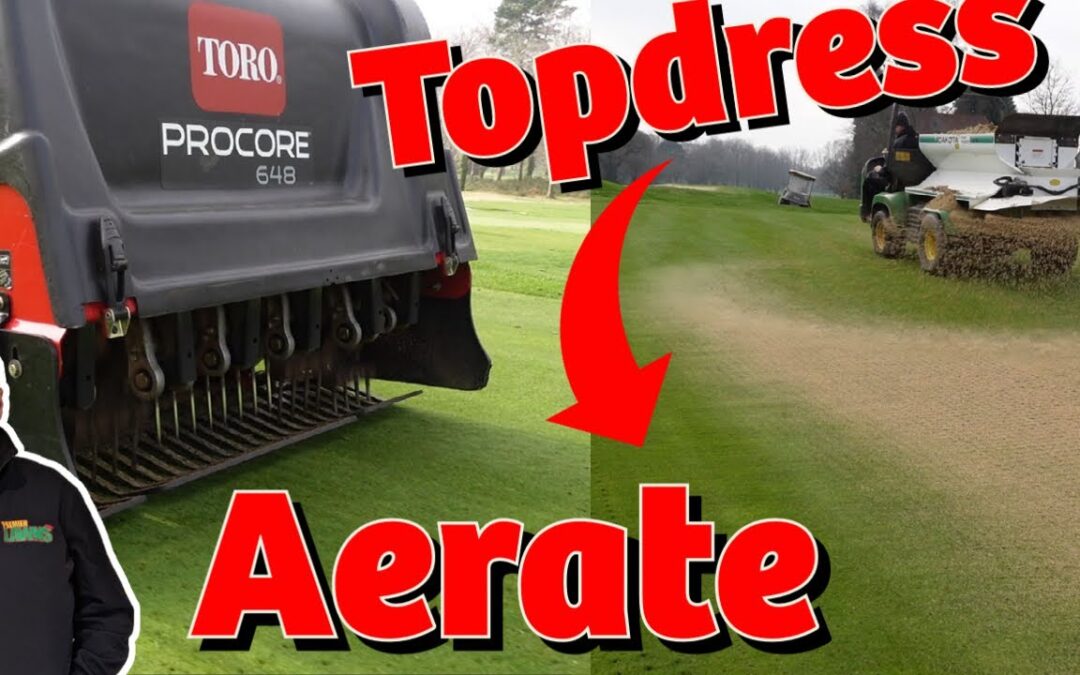
that's what we're looking for at the minute. So today we're using the Toro Procore 648 – this is a fantastic machine that can hollow tine or solid tine so a lot of aeration that's what you'll be
doing with it uh anything from 8 mil time to 19 ml time hollow tine or solid tine.
You also have the ability to set it at a speed so the speeds located here so the slower you go the more holes you get in the ground so that's determining you know what what's happening at the time so also
you've got a depth setting so if you want to go an inch into the green or say four to five
or six inches you can do that – so great machine uh gives the green keeper the option of what
he wants to do at the time and they'll change from year to year you'll never have a program
of what you want to do and stick to it it'll be determined by weather and golfers and just
where you want your greens to be at so that is something that that'll be up to the green keepers
discretion of what he wants to do at the time. So we're at the 10th bunker now and this
is the last stage before the sand goes in.
This is the rubber crumb liner going in with
uh CRL putting it in really just crushed tires and um resin bond going into it so they're
putting that down now and then we'll be able to come in behind them with the sand what the
rubber bond or the rubber crumb does is stops the material underneath getting into your sand so that
contaminates it it's not as white and then it also it stops the sand going down and blocking your
drains so it has a number of benefits it's quite costly but we're going to be the first club in
Northern Ireland to have all 18 holes with a liner. Okay so we've come to one of the last processes
of our program and that's sanding. Sanding is a key ingredient to any golf course but the
golfers don't like it – and your mechanic doesn't like it because it blunts the machines
we'll put on about a ton to a ton and a half a green which isn't a lot really but because
we haven't done big holes in the greens that's all we can get in that's all we want to get
in at the minute so you're looking at say 30 tonne over the golf course we'll pay about
32 pound a ton the reason why we'll get it so cheap is because we'll go through maybe
150 200 ton a year so we'll bulk buy that. The the sand then goes down into the holes we've
created and that'll act like drainage channels so we've maybe 150, 200 000 holes on one of the
greens that'll go into your holes and that also creates your levels it'll work the thatch
as well it'll move about and any thatch you have it'll break it down so sand is a real key element
the green keepers to producing good surfaces.
So we've came to the final piece
of the jigsaw on the maintenance and we have matted all the sand in so
we'll take a wee look at what that looks like – So we have the the sand all matted and
lovely all these particles will go down the holes they'll act like we drainage channels
and really keep the water movement off the top so everything's looking really good and we can
just help the recovery process now with a granular feed in a couple of weeks whenever
the temperature's lift and that'll get the greens back into shape for hopefully the
golfers coming back at the end of the month..