
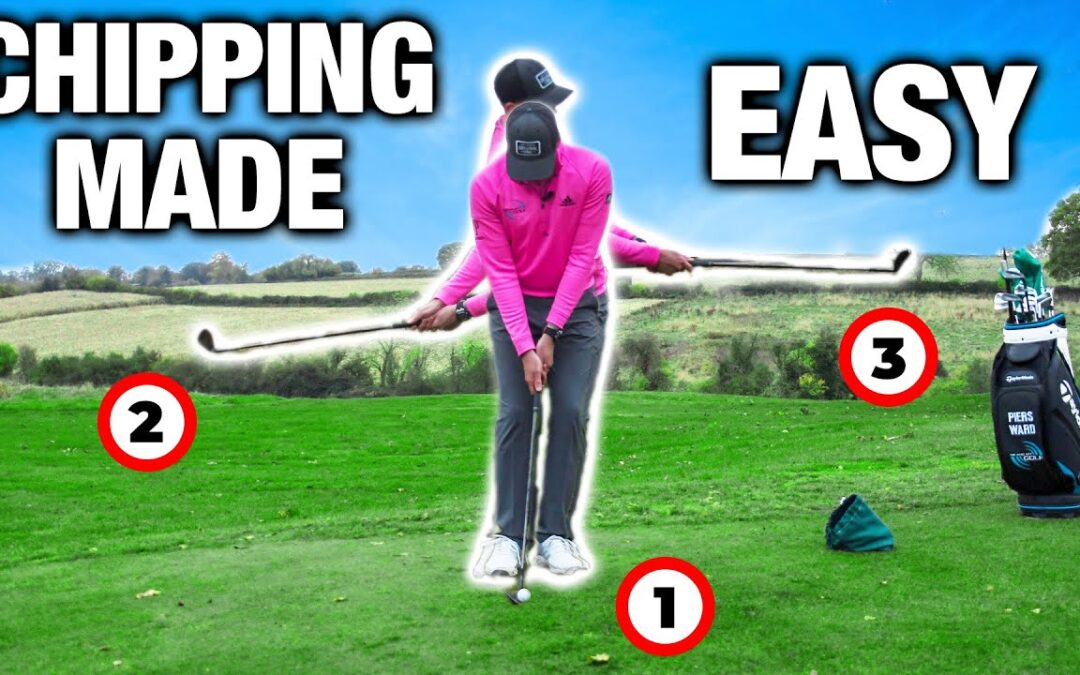
– Are you somebody who
struggles with confidence when it comes to chipping? And do you ever wonder
why it's so inconsistent when you're striking the golf ball? – Yes, what we're going to do today is give you three simple tips that are going to make
chipping easy for you so when you're standing
over the golf ball, you've got a lot more confidence. – Hello, everybody, and
welcome to Me and My Golf. If you are new to the channel and you want to improve your game,
you're at the right place. So make sure you subscribe, hit that bell so you get notified every
time we release a video. And to check out our premium content, make sure you head over to meandmygolf.com and check out our free seven day trial. You can click the link in the description. I'm gonna look forward
to seeing you over there. Alright, Piers, confidence when chipping.
So, I mean, this is just a killer for a lot of golfers out there. We've all been there. We, you know, we still have those moments, but over the years, we've
coached so many golfers and they often do the same things. The same things keep
reoccurring all the time. So we're going to go through
three really simple things that if you practice these things, you will feel confident and you will get better
with your chipping. So what's the first one? – We'll setup. We have to start with setup because if you can get
in the correct setup, you've got a lot more chance.
So what we're looking for here, really when we're setting
it up, I've got a, what? A 20 yard chip and run. I've got a 52 degree. First thing I'm gonna do is
I'm gonna put the golf ball pretty much in the middle of the stance. I like to flare both
feet out a little bit, and we definitely want
to favor this lead side. You'll also notice what
I'm setting up as well, that my right shoulder
is only if anything, a little bit lower than the
left, it's pretty much the same. And that's what we want in order to get a good neutral setup. Unfortunately, what we
see is we see golfers kind of stunned to it, like a golf shot where this right shot's a lot lower, or they get the ball back like this and they get all these contorted angles, which make you just stick
the club in the ground and you duff it. So what we're after is
a setup which allows you to allow the club to
interact with the ground. 'Cause that's so important
when we're playing a chip shot.
So should I play a couple? We'll play one. Again, really soft hands from here, letting the club move back and through, chip it up there and let it run. – Just do one of the one again. There. Just notice when Piers does this, there's no excessive
shaft lean, Piers, here, which we see a lot of amateurs
make the mistake of doing.
They have that shaft leaning forward. Just demonstrate that for us,
where we don't want to be. – So it's generally something like this. I'm gonna come over here because the ground's really beautiful
where I'm chipping from. So over here, we see this
ball go back like this and we see this here. And if you get that wrong, it's a bad one. That one wasn't too bad. But when you're curling
up a divot like that, if you don't get the ball
interaction, correct, you're going to knock it
a yard in front of you. Okay, so second thing we're looking for is the distance the club travels.
So what we're looking for
is a club which goes back and through at pretty similar distance. So if we can get it
going back and through, that's going to help us
gauge the pace of the shot, but it's also going to
help us control the loft, which is really important. And it's also going to help
us control the contacts when the club hits the ground. We don't want it to be in a, in a bad way, which sometimes we can find when we see golfers stand there and ever, this is the common one, short back swing and a long through swing.
Cause they'd been told after, accelerate. – Don't decelerated. You can't decelerate
some of these chip shots. We never see that, by the way. So if you're thinking about
accelerating on your chip shots, – Be very careful, – Be careful cause you don't
really want to do that. – Yeah. Cool. So again, so the way that I like to do it, so this is actually a
drill that you can do. If you can just setup, I'm just going to come around
here so you can see this. So if I set up with a club shaft pointing ever so slightly left my belly button, my arms are connected to my chest and I'm going to move the
club now by turning my body. Now, this is kind of the motion that we want when we're hitting the shot. So nice soft hands and get the club moving with the movements of the body, as opposed to doing it with the hands. You can do it with the hands, but it just becomes more inconsistent.

So when I hit a few shots now, just again, notice that relationship
with my arms and my body. And I think this is something
that we did with Sam a couple of weeks ago on a lesson as well. We got him using his body
better in his chipping, and it really does help
you with the consistency of the contact, but also
the flight, you know, the contact of the ground, the contact of the ball on the face. It really does help. – Just hit me one more there. I'm just going to comment on this. 'Cause we hear this a lot with golfers. We need to keep this,
you know, stiff wrists. Piers, how stiff are your wrists here? – (Piers laughs) On a grip pressure scale, Pull the club out there. It's that easy to move it. It's probably around about a two. When I was really
struggling with the yips, I actually was hitting shots, almost feeling I was
letting go of the club as I was hitting the shot.
That's how soft my hands were. – So the risks may appear
not to be moving much, but they're certainly not stiff. It's more passive because the motion is being controlled by the body. And I think that's really important. Light grip pressure, passive, not stiff. Do not strangle the club to death. This is a very good point, Andy, because the control of the wrist is coming from the movements of the body. I'm getting my arms into
position into my chest, like so, and then from there, all I'm doing is I'm moving my body back, I'm moving my body through. That's what's keeping
those wrists as we want. – You can see how consistent
these strikes are really, it's very hard to get bad
shots doing this as well. – Just quickly, I mean,
kind of look at this here, look at the ground. I played every chip shot apart
from that one over there, I played every chip shot from there. Now there's not a lot of grass here, but yet I'm actually hitting it from the same spot all the time.
That's just because I'm
able to collect that ball lovely off the turf. – Yeah, it's in the bounce, pretty much. Okay, third final one. Actually, I did one lesson on Saturday. Actually, no, yesterday, Tuesday, he was doing this and
everybody tends to come to us for coaching and they're
doing the same thing on the chip shots, so. – I had the same lesson. Different guy obviously, but
it's exactly the same thing. So, okay, third thing is allowing the club again to work with the body
away from the target line. So basically what I'm gonna show you is, I'm going to get my super speed stick. I'm going to stick it on the
target line like so, oops. – Nice target line, Piers – (Piers laughs) I
always aim to the right. So that's a good thing, maybe. So what we're after, when
we're hitting this shot is, oh, this is a little closer, Andy. What we're going to do
is, watch this shot.
So watch the club head as I
swing through and hit this shot. So we can see the club
head has worked very much, pulled it a little bit, but the clip head has worked very much in
from the target line. That is what we want. So when we are hitting a chip shot, we want to see that club head travel in and away from that target line as we're swinging through. What we don't like seeing, is a club which flies down the target line like so. And I know, Andy, we talk
about this all the time. As soon as we see a club go that way, we see a head this way,
we see duffs we see thins, we see disconnected arms from the body.
– Just understanding the concept of where the clubs should be moved. Shouldn't be going in a straight line. It shouldn't be traveling
down that stick there. It should be swinging in from that. And just do this again, Piers. Just notice when Piers finishes
here, as a result of this, look how his chest and his
body's facing the target. Look how all the pressure's
now into his left leg. He's not sort of leaning
back and scooping it. This is what's going to make chipping really easy for you, just
doing these simple things, allowing that club to move in. – And look, video yourself
from the front on view. And like Andy is saying there, if you see any of this coming
back behind the golf ball when you're chipping,
that isn't going to work, this is what gets the ball up in the air. You don't need to help it into the air.
– Right? YouTube. This is where we now
are going to leave you. This is what I offer you,
members, of Me and My Golf. We're going to take you through how to play off these
horrible, wet, muddy lies, and also some of the rough shots as well. Now for YouTube, if you
want to access this, you can do as part of your free trial, click the link in the description and we'll see you over there. Let's get into these horrible lies, Piers. Here, they're not very nice. – I'm not sure about this one here. So, right, okay, how on earth
would you want to play that?