
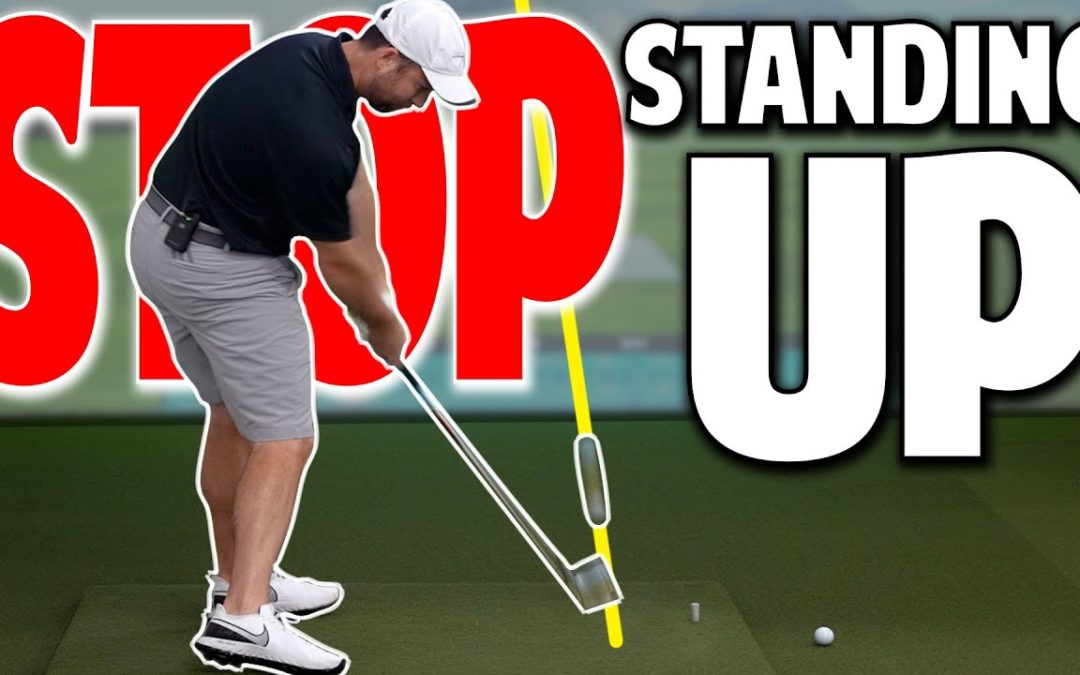
(ball cracking) (ball cracking) – There we go. Hit that nice and solid. 160 yards with the nine
iron, dead straight. Nice little draw on it. I'm not gonna do much better than that. I gotta tell you, a lot of times, I know that I've stayed in
my posture by how it feels when I contact the golf ball. Let me explain why
getting outta your posture is such a problem. And there's one thing, two pieces to it, but one thing that can
really fix that for you.
And most people never get there because it's not actually
staying in your posture that'll fix that. So if I start down a little steep, what I'll end up doing is
standing up outta my posture to try to shallow that club
out and I'll end up flipping. And what happens is when I stand up, notice how my hips go
toward the golf ball. That drives my hands out. And then just to be able to
make contact with the golf ball, my club has to go down. So instead of being
more at a flatter angle like this with my club,
I'm exaggerating here, my hips go toward the golf
ball and I end up doing this.
The shaft ends up standing up and that causes a couple problems. So realizing that if you
stand up outta your posture, this will happen. It's impossible for me
to get this shaft lower, unless I stay in my posture. You see, if I stand up outta my posture, my hips are in the way, and I can't get that club shaft down. If I stay in my posture, now, all of a sudden, I can
get that club shaft down. That's a great thing to know. So let me walk you through
the details on this, and I'll give you a couple
simple tips to fix it as we go through it. So, number one, let's talk
about how that shaft angle can really affect the
direction that the ball goes. So if I have a piece of wood
here, just to demonstrate. I'm gonna put this piece
of wood almost vertical, much more vertical than the shaft would be in the golf swing. But I'm gonna put the bottom edge of this straight toward the target, or straight enough for
demonstration purposes here. Now, as I get that shaft more vertical, what happens is it opens the face.
So I'll give you an example of this. If I put this little magnet on here that shows where the face is pointing, you can see if the sole of the club, the face of the club is straight ahead. The sole of the club
is flat on the ground. Then this club face is pointing
directly toward the target. Now, if I lift this club more vertical, the more vertical I go, the
more it goes to the right. And that's because if I
kept on going that way, the loft on the club
would make it go farther and further to the right. The flatter I go, the more
this goes to the left. In fact, if I took the club and I imagine it being perfectly, the shaft being perfectly
flat with the ground, all the loft on the
club would basically be making the face point directly
over to the left like that.
So you can really see this
when you put a little piece of wood down and you start to
hit shots with a square face and a straight path, but because
the shaft is so vertical, that ball just goes out to the right. So you see, as I got more
vertical, the ball went that way. Not because the face is open, but just because the
shaft was too vertical. And I can simply lower it down like this and the opposite's gonna happen. So I get that shaft flatter. And now all of a sudden, the
ball is gonna go to the left. If I'll even be able to hit it here. (chuckling) Yeah, that face is gonna be square and the ball goes dead left.
So that's a great way to demonstrate how the ball's gonna take off differently just by the angle of the club shaft, even when your path and
face are dead square. Even when you make a great
swing direction wise, you can get a bad result. Now, another thing that's
really interesting with this is when I put this ball on the ground, it becomes very clear to see that when the shaft goes more vertical, the toe of the club is
lower than the heel.
And what ends up happening is if I was to dig down in the ground enough to get this ball up on the sweet spot, I would be chunking it. 'Cause the toe would have
to dig down in the turf. It's not, unless this
leading edge of the club or the bottom of the club
is flat with the ground that I hit the ball solid on the face. And if I went the other way, the same thing would happen,
just in the opposite. Well, the great news is I never see anyone with the club too low. Everybody I see is the
club is way too vertical. So if you're thinking right now, I wonder if my club shaft is
too vertical, like he's saying. I wonder if I'm standing
up, like he's saying. I guarantee you without
a shadow of a doubt, your club is too vertical. 'Cause I never see anybody, unless you're better
than a scratch player, I hardly ever see anybody
with that leading edge flat. So if you're wondering, I can promise you that you need to go flatter
with the club shaft.
Well, that's great news to have because now that I realize
that if I wanna stay in my posture or if I realize
that if I can just get this shaft lower, it will force
me to stay in my posture. You see, if I come up outta my posture, my hips go this way and I
can't get the shaft lower. If I stay in my posture, now my hip's clear back outta the way, and I can get the club shaft lower. So just focusing on the
angle of the shaft at impact can make it a world difference. You don't even have to
worry about the exact angle. If you're in doubt, just go lower, and you'll start to see those divots get squarer and squarer, instead of those kind of
cockeyed, toe down divots. All right, so let's talk about now the two things that I would work on to feel like this happens. Number one, I would start out by taking a little bit of a wider stance.
You see, as I widen my stance, and I'm gonna give you
example, an extreme example, but as I widen my stance, I'm
getting lower to the ground. It's easier for me to swing with this club on a flatter angle. That's obviously very exaggerated, but a lot of times I see
players' feet too close together, especially with shorter
irons, standing way too tall. And now, they're starting
staying outta their posture rather than getting down in it. That's the first thing,
little wider stance. I want some more knee bend. I want it to be athletic
here with my knees, again so I can lower the club shaft. And I don't have to
worry about overdoing it 'cause I never see
anybody that overdoes it.
Now, third, this is the big key here. I'm gonna teach you how to use your hips. And it feels a little bit weird. You may even feel a little shaking, like some shake and bake type
action happening in your hips. But if I roll my hips down and then tuck my pelvis under like this. So if my belt buckle
here, you can imagine, as I tuck my butt underneath me, my belt buckle faces more up. And as I roll my pelvis down to where my butt's kind of
sticking out toward the wall, all of a sudden, my belt
buckle goes more down. So this would be tucked under. This would be rolling it down. It's called anterior and posterior tilt. You don't have to worry about that. Just realize this. In my transition, I want to feel like my belt
buckle goes down to the ground. My butt goes out toward the wall here, and that allows me to get lower and create this room for
the club shaft to be lower.
So that's piece number one,
wider stance, more flex. Get that belt buckle down. And then piece number
two is just to visualize exactly what we did with
this oversized club. I actually want you to visualize the toe being up in the air. So when I come into this ball, I wanna feel like the toe of the club is sticking up in the air, and I'm actually gonna overdo
the opposite of standing up and getting it steeper. Now again, because no one
ever overdoes it this way, I think you can go as
stream as you want to. And if you look at your divots, if they're those nice
dollar bill square divots, then you know you're not overdoing it.
So a little wider
stance, belt buckle down, and then I'm gonna feel
like the toe of the club stays up in the air. And man, I'm gonna hit some
nice, clean, solid shots. (ball cracking) That's about as solid
as I can hit one there. That felt fantastic. Again, 165 with a nine iron. I'm not gonna be able to
do it any better than that. Now there's one more piece of this that I think can really help
to tie it all in together. And it's a video that
I call knuckle dragger. And it's a very specific feeling on how you're gonna take
this shallower angle and what your hands and arms are gonna feel like they're doing. And I found again, when people hear this, it's like a light bulb that
goes off and they think, oh wow, that's a lot easier than how
I was trying to do it before.
Now I can get this club a lot lower. What I'm gonna do is
I'm gonna play a preview of that video here in just one second. If you wanna see the full video, all you need to do is
go ahead and click on one of those cards that
come up on your screen, or the link down below in the description. And make sure you don't miss this. This is a fantastic video. It's really gonna help to
pair everything together, and you can get instant
access to it right now. So let's go and get started. I got an awesome video for you. This one is what I call knuckle dragger. And this is one of the best ones, one of the big missing pieces to players that are
struggling to get more lag.
Now let's talk about when you
lose lag, what's happening. A lot of times what's happening is as you make your downswing, if we're looking for
this down the line view, what happens is my hips
go toward the golf ball. They start to slide forward. My chest moves back away
from this golf ball. So I'm getting farther
away from the golf ball. And then all of a sudden, I cast and I flip and I don't
have a lot of lag there. Well look how far my hands
are away from the ground. Also notice when I get my
hands closer to the ground. So as my hands get lower, then what happens is they
also go forward more. So as I want to have more lag. When you feel like your knuckles
are dragging the ground, then that club is naturally
gonna lag back behind. And then you're gonna
release that out in front. When your hands are far
away from the ground, well, if I had all that lag,
where would I be swinging? I'd be swinging a foot
over top of the golf ball. So you have to kind of flip,
release that lag early, to just make contact with
the golf ball at all.
So having those knuckles feeling like they're scraping the ground is really gonna be a big key. Now, another piece to this
again, when I talked about having losing that posture, your hips go forward. You're gonna want to feel like, as those hands scrape the ground, your knuckles drag the ground..