
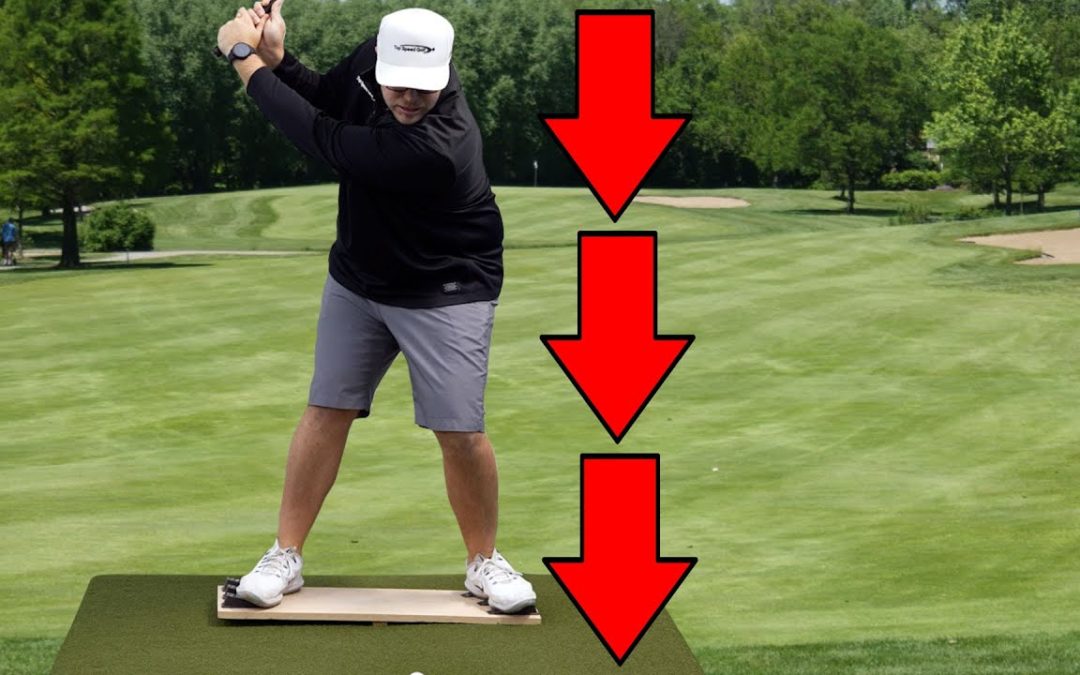
(golf shot hissing) – There is one concept
that you have to understand if you want to have an
effortless and powerful swing. And the concept is that the
force precedes the motion. So simply in the backswing,
I need to be putting pressure into the ground with my trail foot before I start the motion on my backswing, and I have to get
pressure into my lead foot before I start the motion on my downswing. That's as simple as the sequencing can get as far as describing it, alright? So the best way to get this
feeling is to do a drill that I call the teeter-totter drill. Now you may have seen some
things like this online, but you don't have to have
one of these to do this drill, it just makes it a little bit easier to feel it and understand
exactly what's going on. So if you wanna make one of this, it's very easy we did this
is a DIY job right here.
We just took a piece of a one by 12 Oak. I recommend using a hardwood, it's just going to be more
rigid if you use a hardwood. If you use a flimsier wood like
pine or something like that, it might bend a little bit on you, but if you don't have as much,
you know, weight as I do, it may not be as big of an issue. And then we took a one by
one screwed it to the bottom in the middle there and then we actually, you
don't have to do this, but we took some door stoppers and put it on the sides there and that just makes it
so you have something to push against you don't feel
like you're sliding down it when you're putting it back and forth.
So what you're gonna do is
you're gonna step on this and in the setup, what I
like to have players feel is I like to feel like
they have more pressure on that lead side to start with. And the reason for that
is it makes it easier to shift that pressure
into the trail side. And in my opinion, it's a
more powerful athletic motion to do that. Now, you can start out very, very balanced and imagine the
teeter-totter is level here and I'm balanced on this and
shift the pressure that way, but you're not shifting
as much pressure that way. So it's just not gonna be as powerful, but you can play around with it and see if that works for you. And then also you can
start with the pressure on your trail side as we
already have it there. But again, it's not
shifting that pressure. To me it's not as powerful and athletic, but to you, it may feel a lot better.
So play around with that set up position and see what works best for you. But when we look at
majority of tour players, you know, by studying, you know, the pressure graphs that they have, you've probably seen those
pressure maps they stand on, you know, in studying those, I've seen that most of
them are gonna start with a little bit of pressure,
a little bit more pressure on that lead side and that
allows them to transfer that pressure into the trail side. So that's number one, we wanna start with our pressure forward. And then before the club
starts going back, right? So before there's any
movement of this club, we wanna shift that pressure. And I want you to feel like
you're pushing this end of the teeter-totter and
pushing it into the ground as hard as you possibly can.
That's what you wanna feel like. That's gonna make it as powerful and as athletic as possible. So I'm here and I'm
pushing into the ground as much as I can. So, as I mentioned before, the pressure or the force
precedes the motion. So I need to be getting
pressure into that lead foot before this club starts going down. So the only way that I can do that is to start shifting
pressure toward my lead side and start recentering that as I get up to the top of the swing. So typically, we're going to be starting
that pressure shift, you know, somewhere in
this area of the backswing. Somewhere around lead arm parallel. It can differ from player to player just based on the length of the swing, but generally, you know, for a full swing, it's gonna be around where that lead arm is parallel in the backswing,
somewhere in that area.
So I'm here, I'm driving that in and then as I'm getting into this area, I'm starting to shift, I'm starting to recenter that
pressure to my lead side. Now, before I start my downswing, I may not have this touching over here, but the pressure is shifting. I'm moving pressure into that area.
So the pressure is preceding
the motion of the downswing. I may not have it on there, it's typically gonna be re-centered, I'm gonna be closer to level
as I start my downswing, but I have to get that pressure
moving from there to there before I start the downswing. If I go up to the top of the swing and I don't start to shift
any pressure from there, I'm gonna start that down
swing, by then it's too late. I'm gonna be hanging back, I'm gonna tend to swing over the top, I'm just gonna have a
hard time being consistent when I do that. So, if I wanna be able to get this club to work down on plane, if I wanna be able to
get my body rotating open and to be able to get
shaft lean at impact, I have to have the proper
sequence in the swing and that comes from getting that pressure into that lead foot before
the downswing starts. So that has to happen in the
last part of the backswing to be able to do that.

So just in slow motion,
it's gonna look like this. Shifting the pressure and
then as I'm getting up into this area, I'm
starting to recenter it as I get up to the top and then I get that
pressure in the lead foot, I'm gonna keep increasing that pressure all the way to impact as
I come all the way around and I come around into the full finish. So if you have one of these, you can work on doing that
sequence and do it really slow like I just did there and then
start to build up the speed little by little by little. Now, as you get more and
more comfortable with that, obviously we can't have
this on the golf course, so it's not gonna do us much good, right? If we can't do it without it.
So you wanna start working
and getting the same feeling of being able to do it without it. So I wanna feel pressure
into the trail foot, bringing it back and I'm
starting to shift that pressure back into my lead foot
before I start the downswing and now I wanna really
maximize that pressure as I'm coming through. So let's see if I can kind
of put it all together here and see if I can get a
good pressure-shifted kind of swing here. (breathing heavily) (golf shot hissing) Now, one thing that I didn't mention that is critical for this is getting a good turn of
your body in the back swing. That's so critical for this
because if I don't turn my body, I just don't have enough time to be able to get to my lead side. If I'm shifting pressure here and I'm only lifting my arms up to here and not turning my body, I just don't have enough time
to get that pressure back to my lead foot and to be able to sequence
the swing correctly. So in order to have a good sequence and to be able to also
create enough space in time to accelerate the club to have that effortless
and powerful swing, I have to get a good turn of my shoulders.
I mean, think about. Look at players that have the most
effortless looking swings. Look at Freddy Couples, right? He's getting a big turn. If you look at Ernie Els, big turn. All these players that have these really effortless looking swings, they all have big turns. So it's very, very important
to have the proper sequence when you do that. So I have a fantastic bonus video for you where Clay Ballard, the
founder of Top Speed Golf is gonna go over his best power turn drill that's gonna help you turning right and getting that sequence
of the downswing correct. So if you'd like to see
a preview of that video, just stick around but if you'd
like to see the whole video, all you have to do is click the i card that's gonna appear up on your screen. If you don't see the i card no worries, you can click the link
in the description below. Play well and I'll talk to you soon.
– Most of the instruction out there today is killing you of your power. The things that they're telling you to do can make you hit it shorter and worse than that not
even any more consistent. I'm gonna go over some of the real secrets to powerful, consistent
golf in this video. Let's go and get started. So here's some of the keys
into making that happen. If you wanna incorporate
this in your swing, let me break it down
exactly what you should do. Number one, let's focus
on the belt buckle. This is another big misconception. I wanna keep that belt
buckle facing the ball so I can really stretch out my midsection and really get loaded up.
I'm not a big fan of that. That's really gonna kill your distance. In your back swing, I wanna
feel like that belt buckle rotates to the right and you
really let your hips and legs be loose. Notice how my legs are moving here. I'm not trying to keep
those rigid and tied or I'm really just taking all
the speed out of my swing. (golf shot hissing) All right so on that one, I really felt like I let
my belt buckle rotate back and a good key to this is feel
like your knees are loose. I feel like when you
make your back swing… Piece number two, let's go
ahead and rotate our shoulders. When I let my lower body rotate, my upper body can rotate
a lot better also. So if I let my hips move,
my shoulders will move more. So here once I've got
my hips working well, I'm gonna add to that, my
shoulder is making a big rotation. On average, on the PGA Tour, players are getting about 120
degrees of shoulder rotation. I don't see hardly anybody
getting less than 90 degrees.
So it starts with the
hips, knees nice and loose, allow the belt buckle to
rotate and then from there… So those are two really big keys. But here's the truth, there's one thing and if
you don't do this correctly, nothing else is gonna work..