
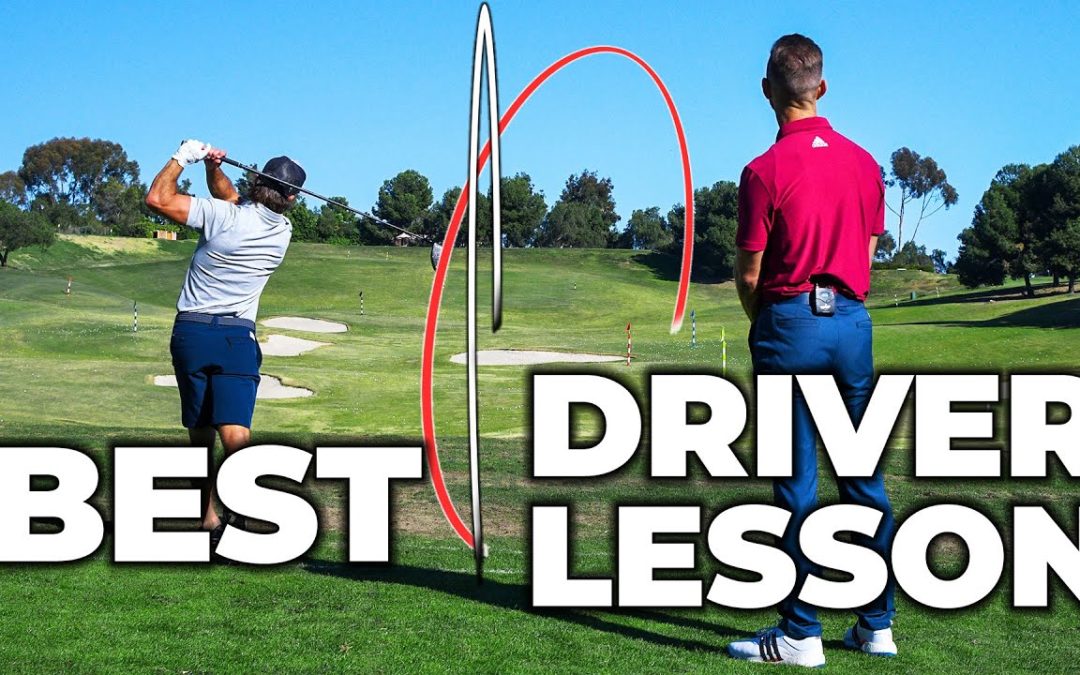
– Are you sick and fed up of losing your drives out to the right, often losing your golf ball and definitely losing distance? Well the good news is, in this video, we have three tips that are really, really simple, that are gonna make your
drives longer and straighter. And the best part about is, it's with no extra effort. – Yes, welcome to "My and My Golf", now, if you want to improve your game, then consider subscribing, we are here to help you get better. And if you enjoy this video and it helps you with your driving, make sure you hit the like. – Hello and welcome to
"Golfers Transformed" our new show where we transform the
golf swings of our members. So we've just had a
great lesson with Jimmy, a member of team, "Me and My Golf" and Jimmy, with the
driver had a two-way miss. Now, he was also losing a lot of distance as a a result of this as well. So what we had is a natural shot which wanted to go to the right, but then a compensation which would make it go to the left.
But, he was losing a
stack of distance as well, good athlete. What were the two main
things that we were seeing? – Okay, so yeah, Lee was a good athlete, really strong, up to like 117 to 119 miles
per hour club head speed, but not maximizing the distance. Now the key thing was really that he had this two-way miss, but we always start at the basics.
You've gotta look at that first. And the first thing we noticed with Jimmy was that his ball position
was way back in the stance. You'll see on screen here the ball was way back in the stance closer to the middle than the front heel. Even though Jimmy knew it should be more towards
the front of the stance, he still had it there. And also there was a
slight issue with the grip, the left hand was a little
bit too high in the palm which was causing the
club face to be open. Now, let's just explain that a little more because this is really
important to understand especially if you've
got this big high slice that you hit. Well, when the ball is
back in the stance too much a couple of things happen. First of all you're gonna
hit a little bit more down on the golf ball, but also the further the
ball is back in the stance.
The more the club face
wants to point to the right. You can see here, look that face now is out to the right. The more the ball is forward in the stance the more we will up on the golf ball we know that's gonna help with yardage, but also look how square
of the face is now towards the target. That gives us so much more chance. Whereas if it's back, straight away it's bringing
that right side into place.
So a quick change in ball position can make a huge difference. And it certainly did with Jimmy. And the reason we changed the grip, we're just gonna show actually, Jimmy now impacts to the driver, you'll see that that club face when he struck the golf ball was way open, but also very lofted. This was causing a real
high flight high launch with a loader spin, like up towards 5,000 RPM-
– Far too much. Far too much.
– No good at all. So that was robbing him of distance. Now because of the
positioning of his left hand this was causing the club face in the downswing to be a little too open.
Then when the club's open, we have to release early, we add loft, and that takes
out the speed completely. So, a slight grip change made a huge difference. So this is what we did, first of all, really simple; and this is key because as we said, I said to Jimmy, "Jimmy where should the
ball be with a driver?" He says, "Opposite the left heel." Well, he knew it, but he
still wasn't doing it. So make sure when you're on the range, you test, understand exactly where
that ball position is with the driver. Generally, golfers have it too far back. So you can see I've got these cross hairs in here now, lineman sticks, and I'm gonna make sure I'm setting up, and this left heel is right
up against that stick. This for Jimmy was, "Wow, this feels so different. This feels quite really strange"- – (chuckles) But it's interesting because he knew that it should be there. So he knew that the alignment
stick should be there and that's how it should look.
But then the feel was so weird, wasn't it? – Yeah, he was like, "Well, this feels totally different." But now this gives him more chance to square the face. Now the issue was, put the ball without changing the grip. Well now he's gonna hit it even higher. So this is why we needed
to change that grip, but we also just wanted to take out the right side of play. If we could take out that right side, have a more predictable shot, we could then start to lower the flight and hit a little longer. So first of all, this was the big thing, and now from this change the start direction was straight away a lot straighter. – Come on Andy, let's
see you hit one, then. – It's gonna be a high bomb, I'm hitting it well at the moment, especially with this new driver. (golf ball whack) Woah! – He actually telling the
truth for once, look at that.
– Very nice.
– That was really good. – That was very nice. Strong wind, here at the Grand. – Let's get into the grip then, let's see what we've got with this. – Okay, now the interesting
part about this, I might come in a little
closer to you guys here, Jimmy actually had, you're here, "Oh, you need to see
two to three knuckles." Well, Jimmy had two to
three knuckles visible. The issue that it was, was more really where it was in the hand. It was way too much in the palm. And when it gets too much
in the palm of the hand it tends to want to open the
club face on the way down. So what we did, we wanted to put it more in the base of the fingers here, base of that four finger across the base of the little finger.

And now we say this so often we should be able to rest that club underneath the heel pad of the hand. This is so important. This now, straight away as
soon as he held the grip, he went, "I feel like
the club wants to close." I says, "Great, because
you keep hittin it right." So, this is a good thing, it was a good feeling to have. And straight away, the shots that he started hitting there started straight or even went left. – Yeah. – He couldn't even hit it
to the right from there. – This is something that
you need to do right now, pause the video, get a golf club, can you hold it up like that? And give it a test and let us know whether that's actually
what you're doing naturally or whether you have to change things to make that happen. – And don't underestimate the
placement of where this is. It's not just about the knuckles, it's where this sits in the hand which really makes a
difference to the face.
– It's the most important part of the lead hand on the golf club. You can sometimes get away with a slightly weak grip, but as soon as you get that
club up in the palm there, high up in the palm into the thumb area, it's really difficult. – Okay, let me hit one more and then we're gonna
give you one more thing that we did actually after the lesson which made a big
difference to him as well. (golf ball whack) – Nice. Very good. And I think, look, one thing that we mentioned already- – Big toe on that-
– big toe, it was good though, it was okay.
– A good toe.
– A good toe. One thing we mentioned already, Jimmy was an athlete,
he could move quickly. Now, the reason he could do this is because he was actually a
really good baseball player, a good hitter. So as much as he created a really good body movement
by playing baseball and created that speed, unfortunately caused a slight problem in how he used his hands and his arms, hasn't he? – Yeah, and we actually videoed him in slow-mo doing his baseball swing. And when you look at his baseball swing generally we see this with
a lot of baseball players. Is that when you hit the baseball this face would be wide open like this.
We have this sort of late release. – There's no release at all already- – So there's no release. So we've just hidden it like this and so there's no release. And you look at the face, and if you look at the
slow-mo on Jimmy's there, that face is wide open. So the final part which we did with him after the lesson actually was like, "Look, this is what you
need to do moving forward." We just encouraged him to actually rotate the
toe a little earlier past the golf ball. We said, "Look" I actually grabbed the club and I just turned the club and says, "What do you feel?" He says, "Well, I feel
the toes movin over. I can feel it turnin and
that feels different." He says, "I almost feel
like I'm shaking hands with this right hand." And this was a great feel for him. I got him doing one handed swings without the club just feeling like he's rotating that palm more over and down.
And then straight away
he hit a couple of shots down this end of the range. And he was hitting these low draws compared to these high weak slices that were going nowhere. It was a massive difference. – And look, the main thing
with this was really, by moving the ball forward
and changing the grip, he hardly hit any to the right. I think he hit one shot to the right. The main thing that Andy was doing by showing how to release the club better, was really just trying
to lower the ball flights and make it stronger, make
the ball speed faster, and not carry it 260, he should be carrying it 280, 290.
So he's probably losing 30 yards. – Yeah, and it was just
a nice feel for him. The only thought that we
gave him in the golf swing, and I said to him, "Look, make sure now, just use the golf ball as your guide." So, if you're hittin it high right and the ball position's in a good place and you've got a good grip, you haven't closed or released that club face early enough. If you hit a snap hook you've probably released
it a little bit too early. So now he's got some feedback to go, "Well okay, now I've just
gotta work on one thing which is the closure or
the release of the club." And he's gonna be doing
it based on what he sees but also based on him making sure the ball position's in a good place, making sure his grips in a good place.
And now he's got that one
thought through the golf ball, and it was amazing to the difference especially when we finished off down here as well.
– Yeah, absolutely. And if you think about this, it's inevitable that we're
going to have a miss, you're going to have a consistent miss. But when you've got a two-way miss, it's just a nightmare. So at least what we did with Jimmy was, we got rid of the right and said, "Well look, do you know what, as Andy said, you may every now and then get a one that goes a little bit to the left, but that's fine, you just don't feed as much
release into that shot." But look, as soon as you can
get rid of the two-way miss you will save yourself a
lot of money in golf balls.
– So there we go. Hope you enjoyed that. That was a great lesson with Jimmy some big results that he got there. And if you want to check
out the whole lesson it's exclusive to our members
over at meandmygolf.com. So click the link in the
description and check it out..